Studio Demo · Fictional school — Montessori Makers School is a fictional school built by Montessori Makers Studio
Build yours →Home / Our Program / Upper Elementary
Forming a strong sense of self.
Young people ready for longer projects, deeper reasoning, and growing responsibility for the direction of their own learning. Collaboration and research are central.
2
Upper Elementary classrooms
26
Children per community
6 wk
Typical research project
11:1
Children per adult
Independent study
A six-week project, chosen and defended by the child.
Twice a year, each Upper Elementary student proposes a question, negotiates a scope with their guide, builds a schedule, and presents the result to the community. Past questions have included why Chicago reversed its river, how a cochlear implant works, and whether the school garden could feed the lunch program.
The proposal is the lesson as much as the project. Children learn to distinguish a question they can answer in six weeks from one they cannot, which is a skill many adults never acquire.
Responsibility
They run the things that need running.
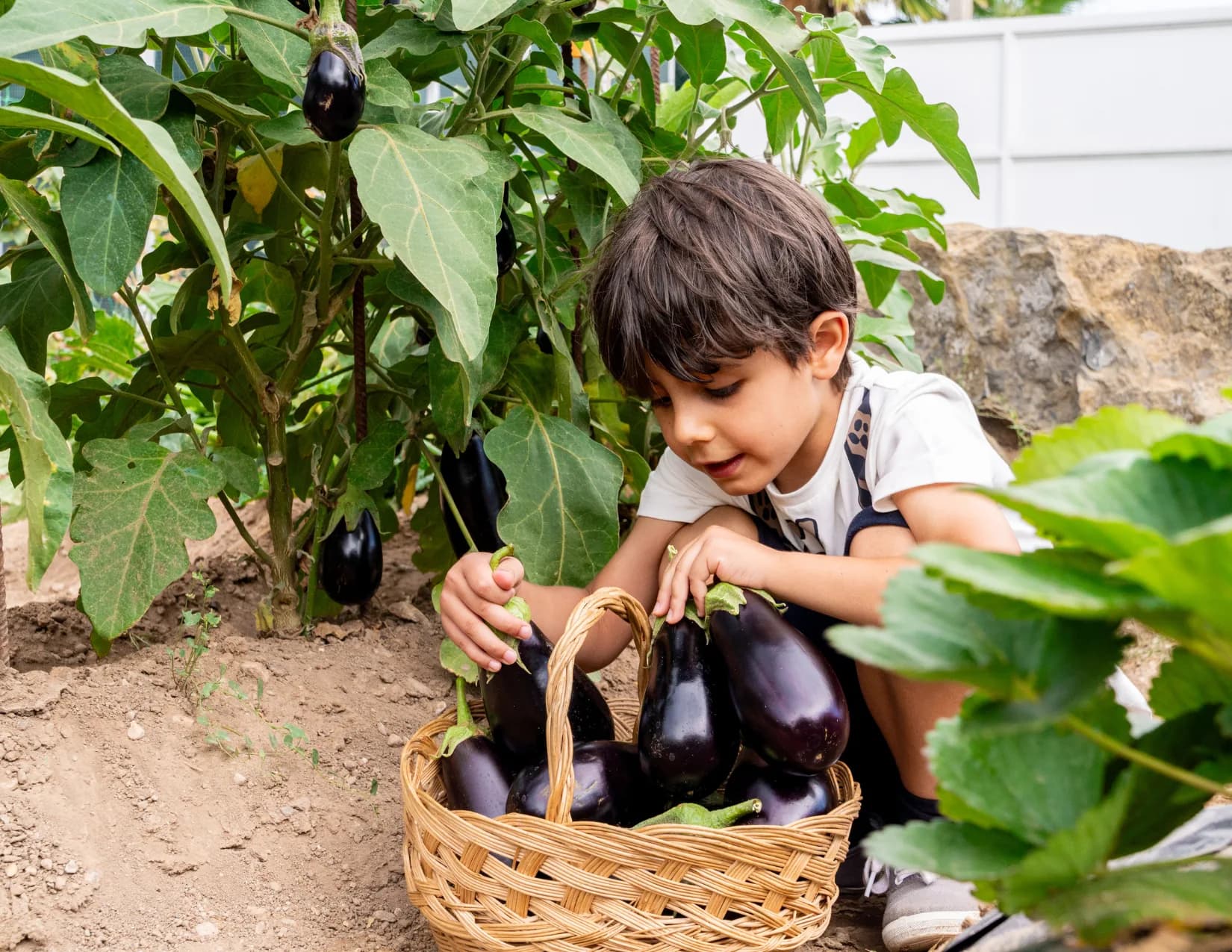
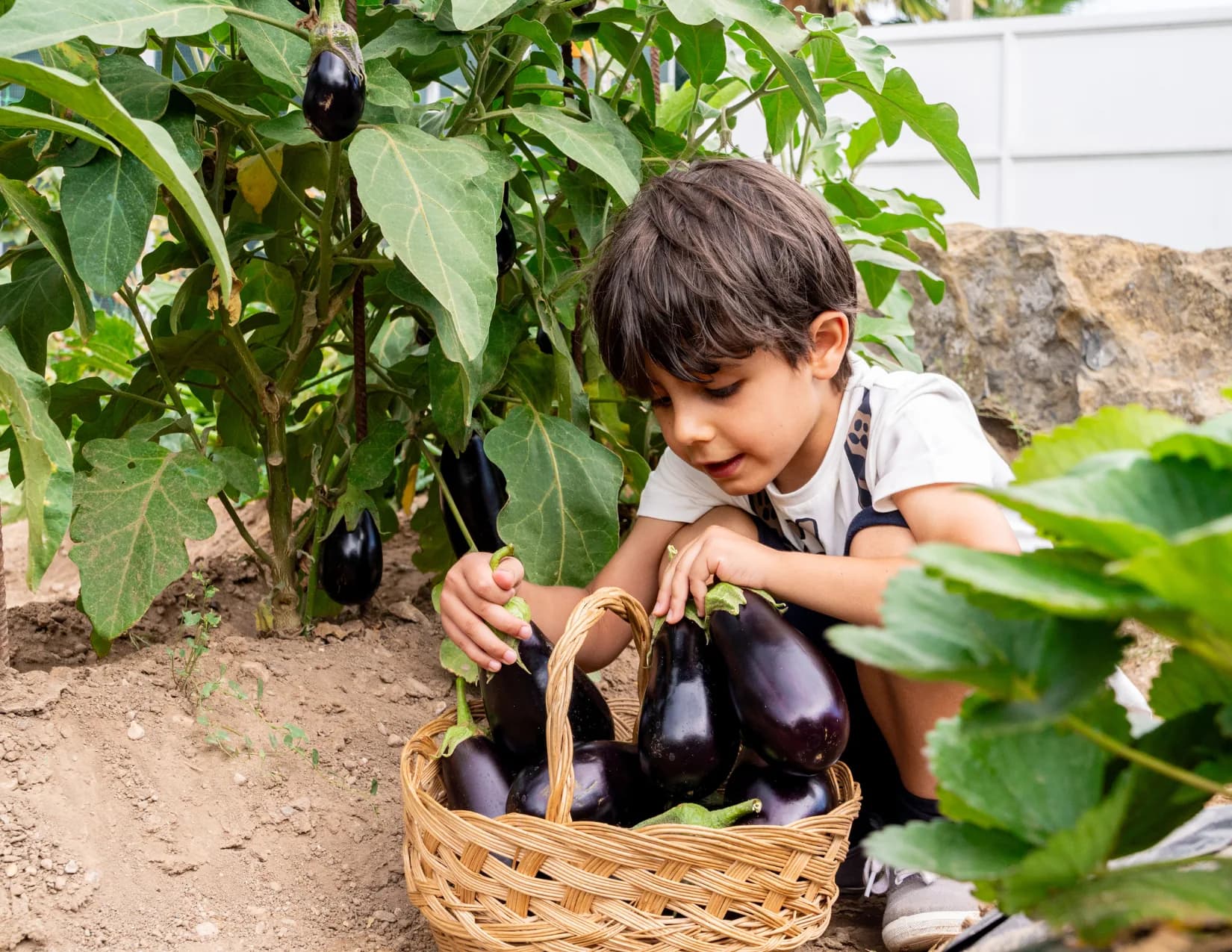
Upper Elementary keeps the school garden, manages the lunch rotation, mentors Lower Elementary children on materials they mastered years ago, and holds a weekly community meeting where genuine disputes get raised and genuinely resolved.
The adults in the building are careful not to take this work back when it is done imperfectly. A child who has been trusted with something real, and has occasionally dropped it, is building a different self-image than one who has only been trusted with practice.
Preparing for what comes next
The transition to secondary school, handled deliberately.
In the final year we work openly on the skills a conventional secondary school will assume: note-taking from a lecture, managing a long assignment against a fixed deadline, sitting a timed written assessment, and talking about your own work in an interview.
Families begin secondary school conversations in the fall of the final year, and our Head of School writes for every applicant. Because our students leave at twelve they are applying for seventh grade, so the options are the CPS Academic Centers, the independent schools that take a middle-school cohort, the Montessori adolescent programs, and the neighborhood and magnet schools.

The rhythm
What a day actually looks like.
The three-hour uninterrupted work cycle is the non-negotiable centre of the day. Everything else is arranged around protecting it.
On the shelves
Four things you would see on a visit.
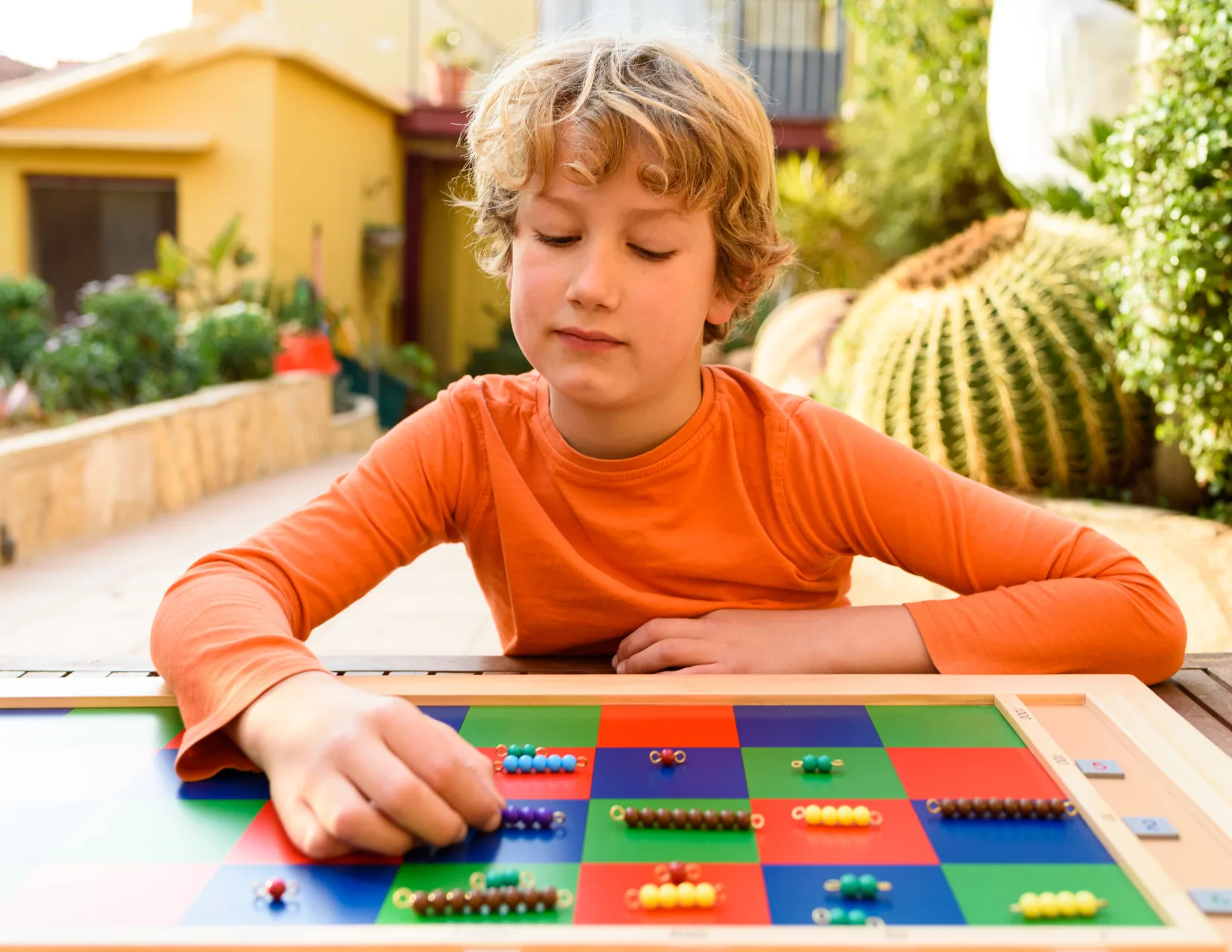
The Bead Cabinet
Squares, cubes, and roots, still worked by hand
Sentence Analysis
Complex syntax, diagrammed and argued over
Study of Civilisations
Fundamental human needs, traced across cultures
The Garden Ledger
A real budget, kept by the children, that has to balance
From a family
“Watching our daughter mentor a younger child using a material she mastered two years ago — that is not just learning. That is formation.”
The Vasquez Family
Upper Elementary, since 2018
The continuum