Studio Demo · Fictional school — Montessori Makers School is a fictional school built by Montessori Makers Studio
Build yours →Home / Our Program / Primary
Teaching children to teach themselves.
The foundational years. Children develop independence, concentration, and the habit of following their own curiosity through self-directed work with purpose-built materials.
3
Primary classrooms
24
Children per community
3 hr
Uninterrupted work cycle
8:1
Children per adult
The prepared environment
A room built to the scale of a four-year-old.
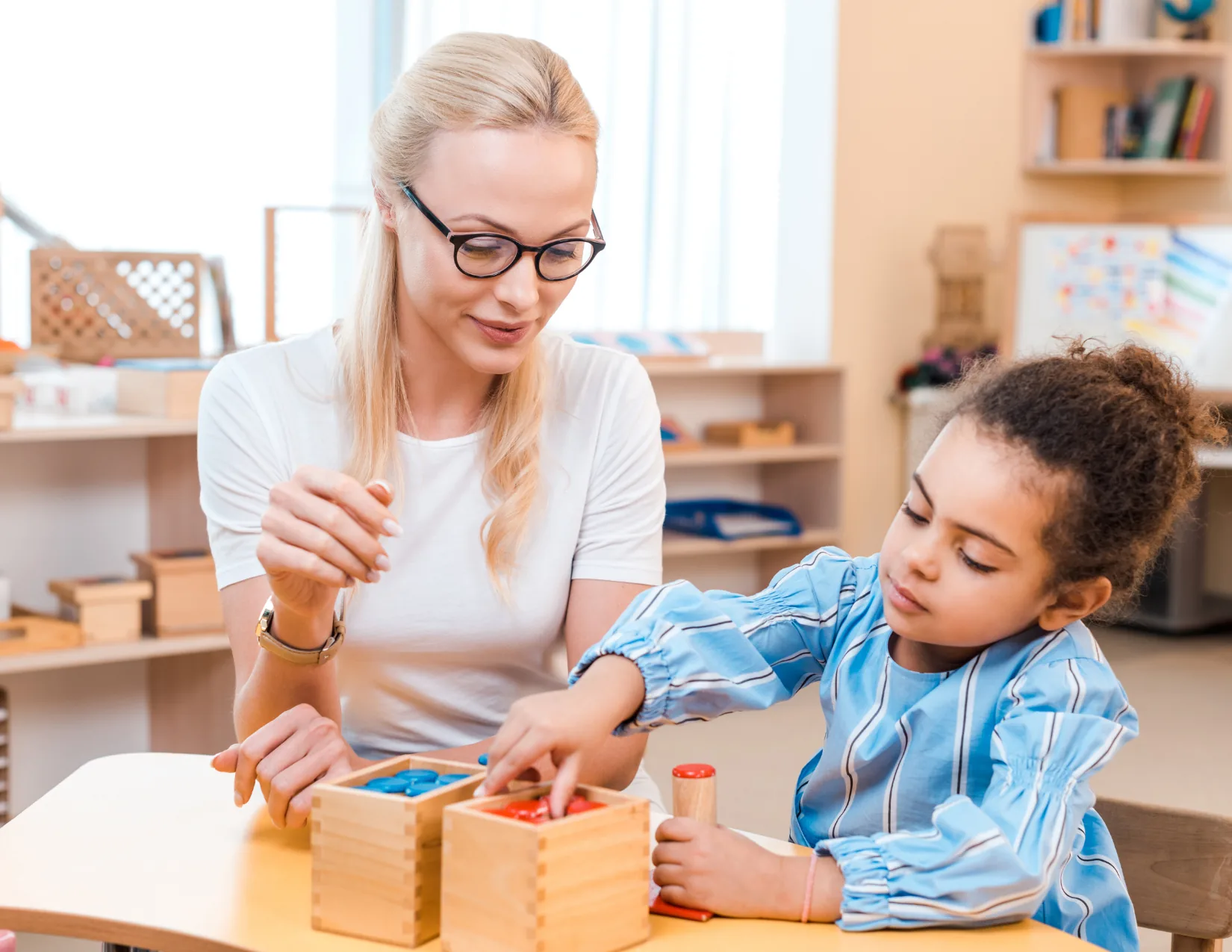
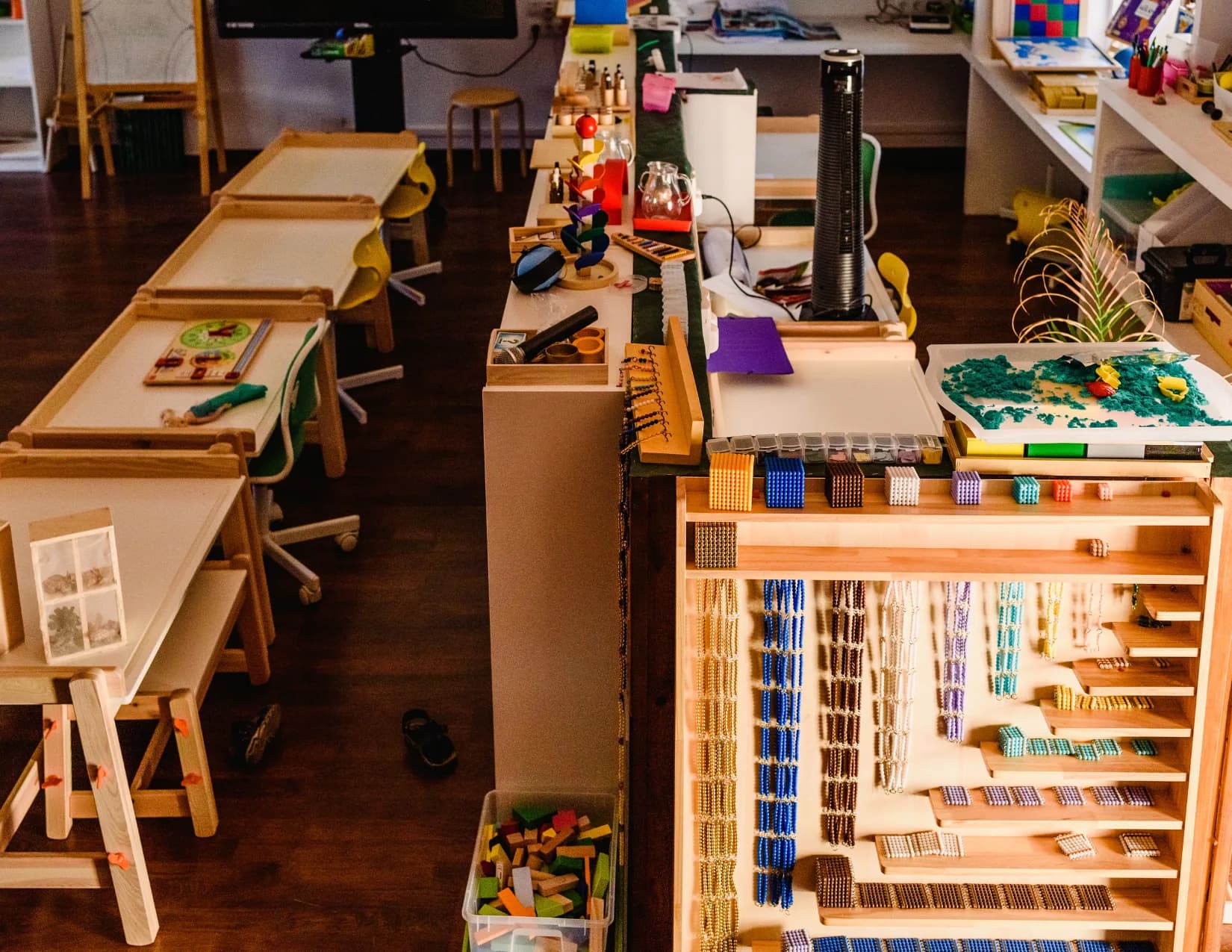
Everything in a Primary classroom is reachable. The pitchers are glass because glass breaks and breaking teaches care. The shelves are low, the work is displayed rather than stored, and every material has one obvious home. A child who wants the pink tower does not ask permission; they walk to the shelf, carry it to a rug, and begin.
This is not a decorating choice. A three-year-old who can pour their own water, fasten their own coat, and clean up their own spill is building something an adult cannot hand them: the working belief that they are capable. We spend the first months of Primary on exactly that, and the academic work rests on it.
Practical life & sensorial
The work that looks like housekeeping is the work that builds the brain.
Pouring, spooning, buttoning, sweeping, polishing. To a visitor these look like chores. To a three-year-old they are the first sustained acts of concentration they have ever performed, and concentration is the capacity every later academic subject draws on.
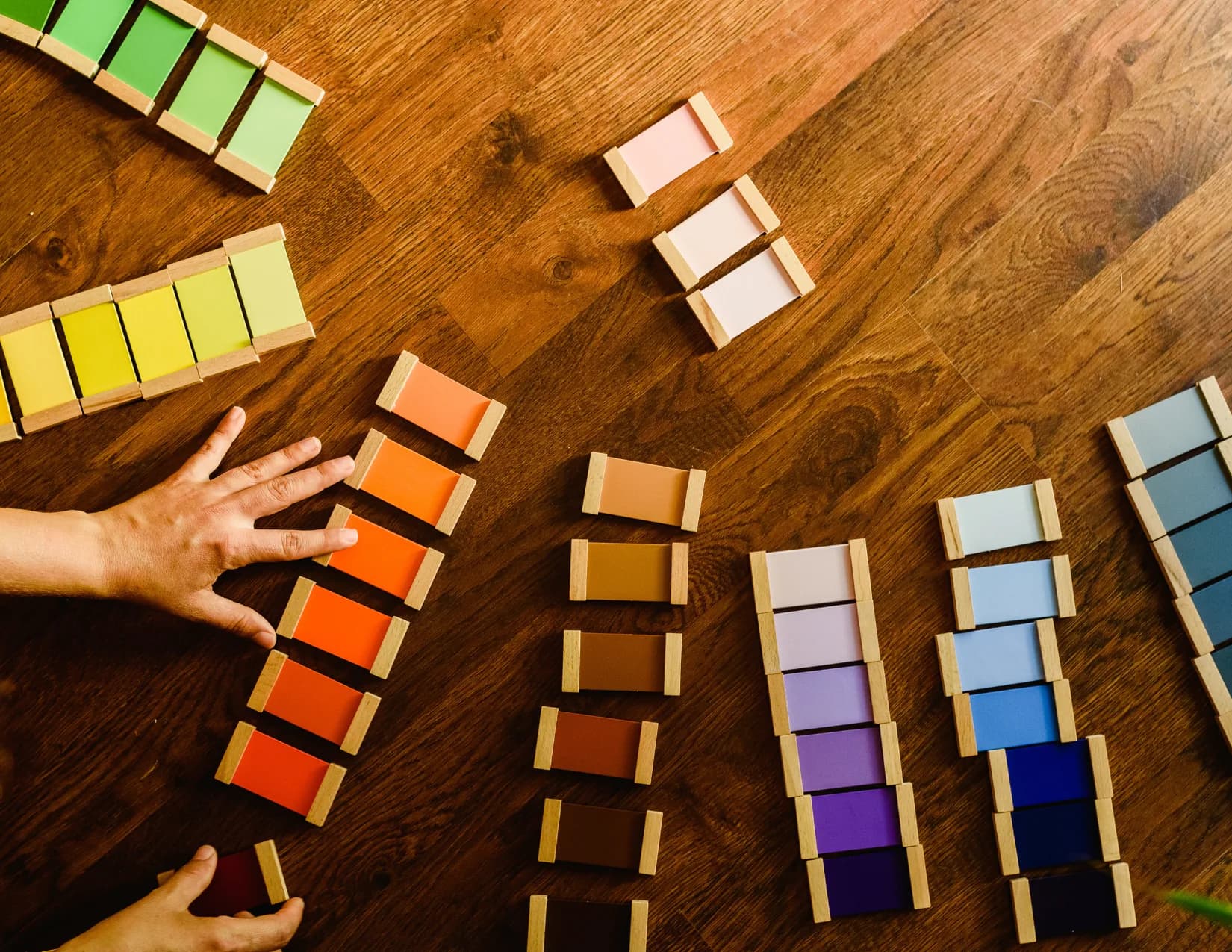
The sensorial materials — the pink tower, the brown stair, the red rods, the color tablets — isolate one quality at a time so the child can build precise categories for a world that arrives all at once. Long before a child names a triangle, they have held forty of them.
Language & mathematics
Most of our children read before they leave Primary. None of them are taught to.
Sandpaper letters give the sound a texture. The movable alphabet lets a child build a word before their hand can write one. Somewhere in the fourth or fifth year, usually without ceremony, the pieces connect and the child reads — often to their own visible astonishment.
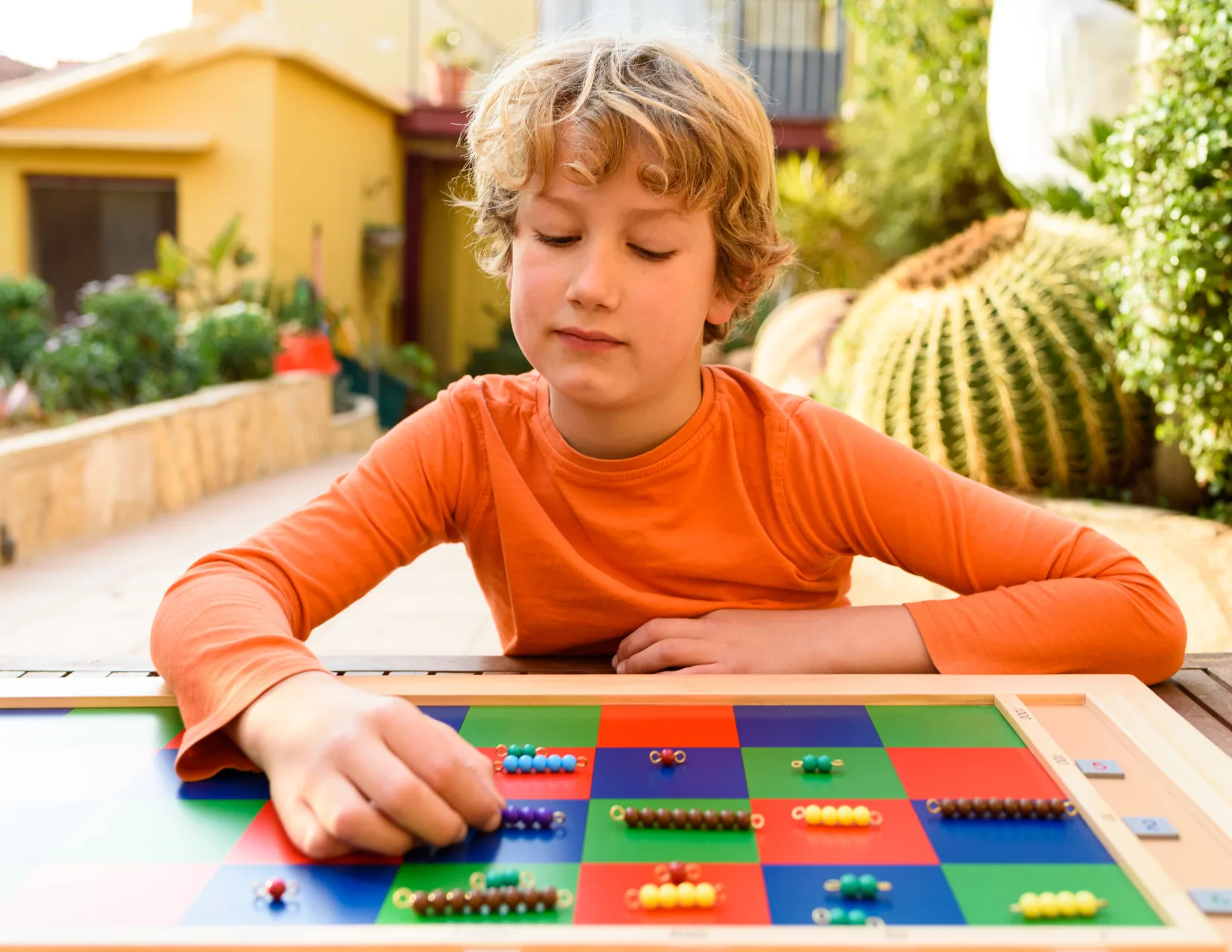
Mathematics arrives the same way, through the hand. The golden beads make a thousand something you can carry across a room with both arms. Children work with the decimal system as a physical fact for two years before it becomes an abstraction on paper.
The rhythm
What a day actually looks like.
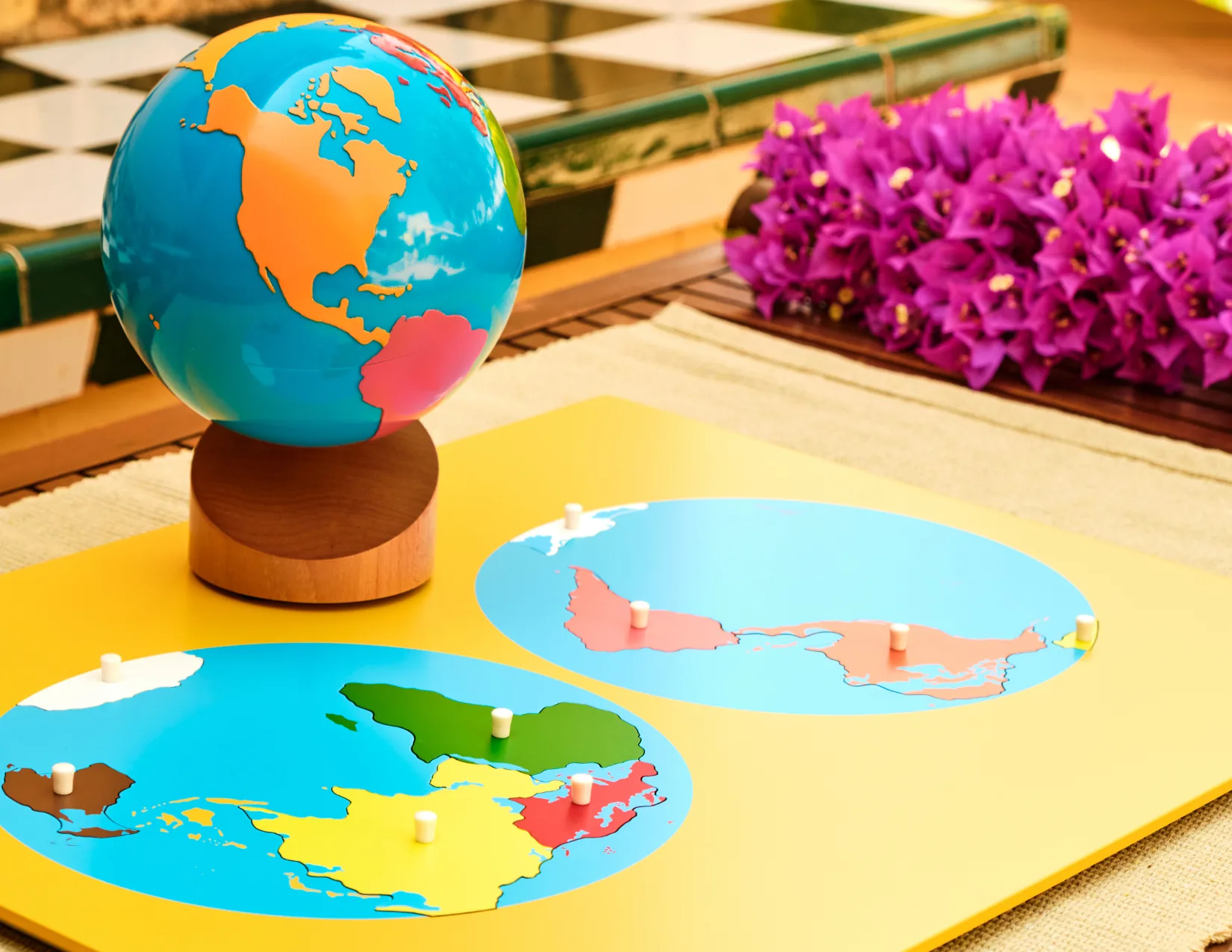
The three-hour uninterrupted work cycle is the non-negotiable centre of the day. Everything else is arranged around protecting it.
On the shelves
Four things you would see on a visit.
Pink Tower
Ten cubes, one quality varied — the first lesson in dimension
Sandpaper Letters
The sound of a letter, learned through the fingertips
Golden Beads
Units, tens, hundreds, thousands — the decimal system you can hold
Movable Alphabet
Writing words before the hand can form letters
From a family
“She came home in October and asked if she could set the table. Not because we asked. Because she had learned to fold a napkin at school and she wanted to show us.”
The Okafor Family
Primary, since 2021
The continuum