Studio Demo · Fictional school — Montessori Makers School is a fictional school built by Montessori Makers Studio
Build yours →Home / Our Program / Lower Elementary
Cultivating curiosity.
The age of imagination. Children explore history, mathematics, language, and the living world, drawn forward by their own questions and supported by small-group work.
2
Lower Elementary classrooms
28
Children per community
5
Great Lessons each year
9:1
Children per adult
The Great Lessons
Every year begins with the universe.
The first week of Lower Elementary opens not with a syllabus but with a story: how the universe came to be, how life arrived, how humans came, how language was invented, how numbers were. Five stories, told with experiments and charts, retold every year of the three-year cycle.
They are deliberately enormous, and deliberately incomplete. A six-year-old who has just been told the story of the coming of life does not want a worksheet about it. They want to know what a trilobite ate. That question is the curriculum.
Going out
The classroom has a door, and children are expected to use it.
When a research question outgrows the room, a small group plans a trip: they find the expert, write the letter, work out the bus route, and account for the cost. A guide accompanies them, but the planning is theirs. We have had children arrange visits to the Field Museum, a bicycle repair shop on Halsted, and the office of a structural engineer.
Going out is where the abstract habits of the classroom meet a world that does not rearrange itself for children. It is also, reliably, what alumni remember most.
Mathematics & language
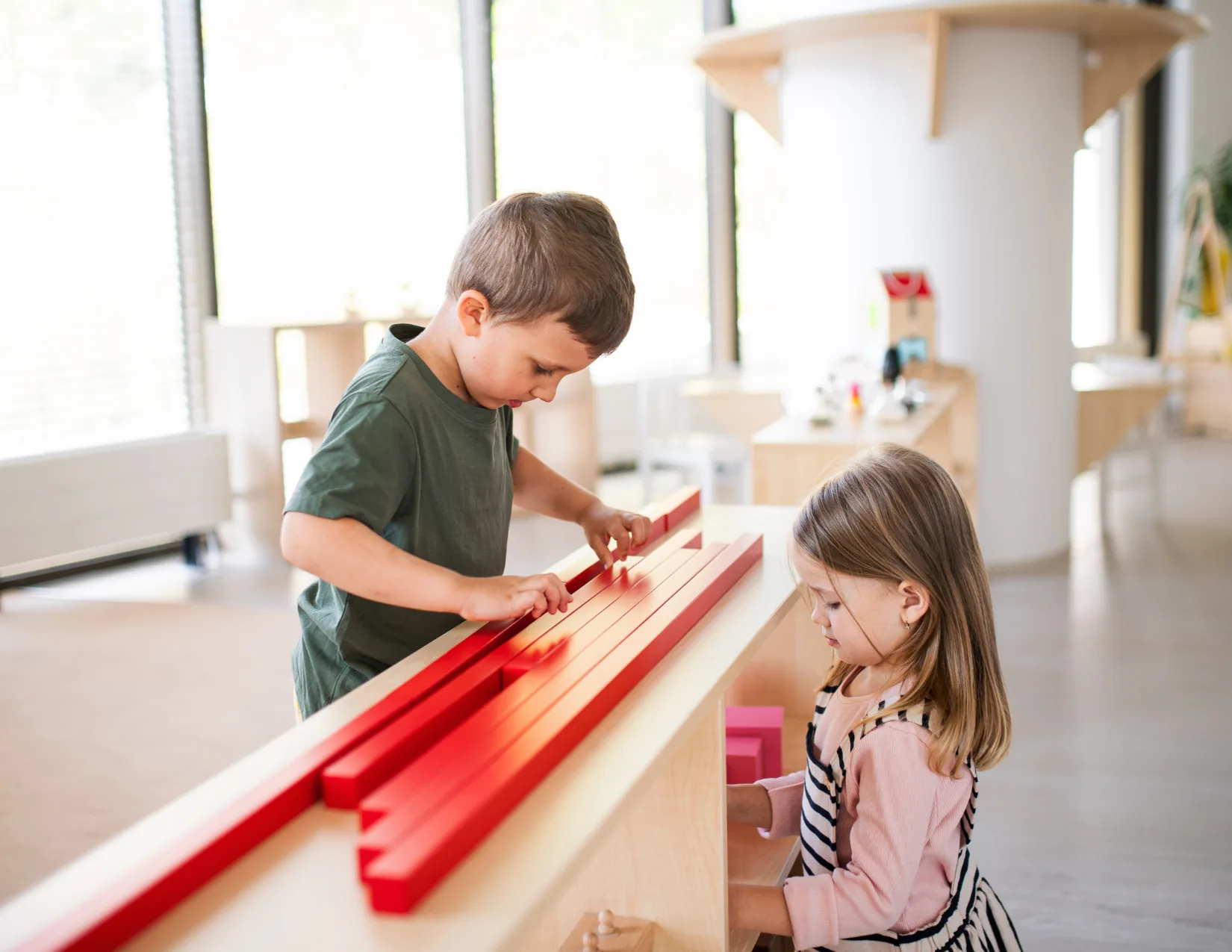
From the golden beads to long division, without a worksheet in sight.
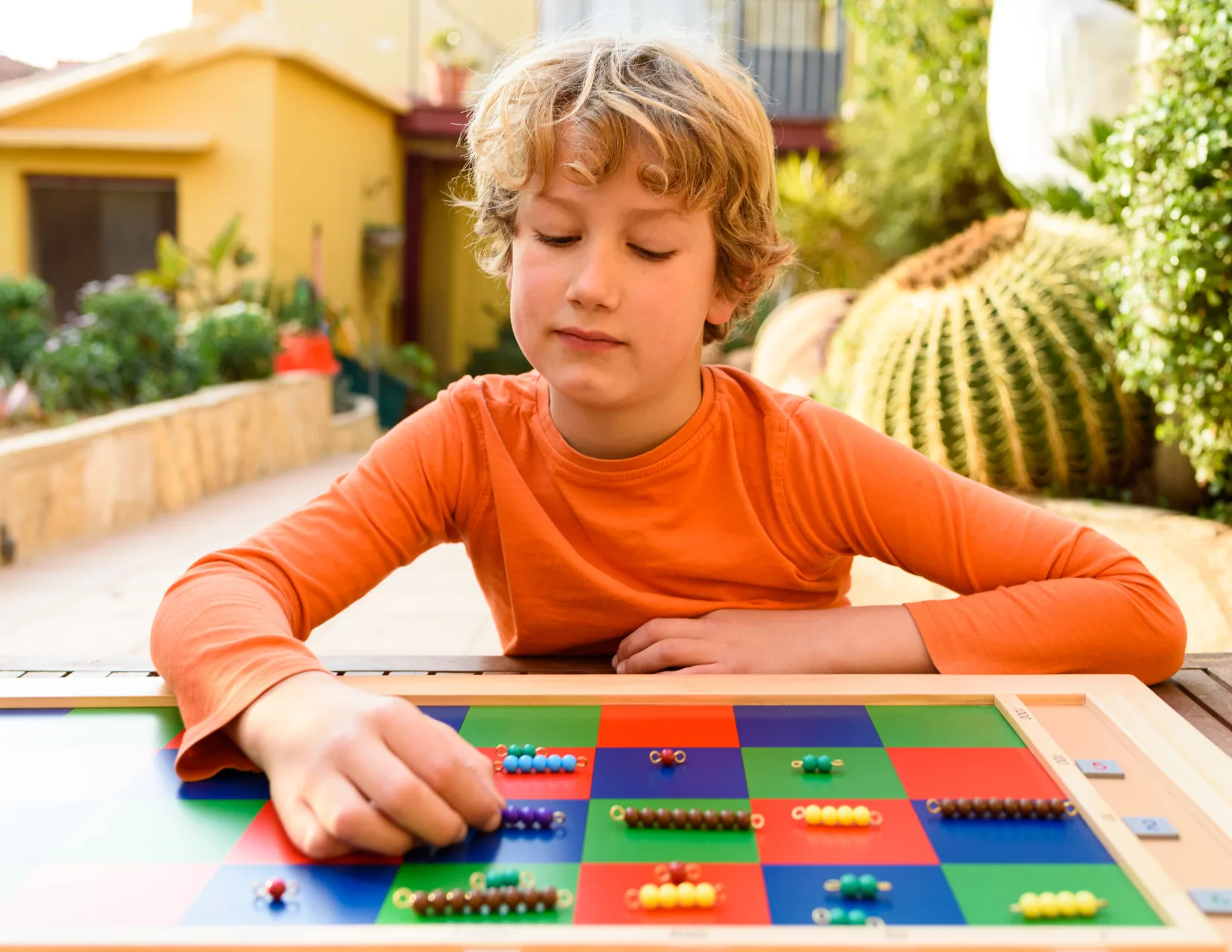
The materials that made quantity concrete in Primary now make operations concrete: the stamp game, the checkerboard, the bead frame, the racks and tubes. A child performs long division with physical quantities and a team of small green skittles long before the algorithm makes sense on paper — and when it does, it makes sense as a shortcut for something they already understand.
In language, grammar becomes a set of symbols and a set of objects. Children build sentences, classify the words with colored shapes, and discover the structure of their own speech. Writing moves from single sentences to research reports, illustrated and bound.
The rhythm
What a day actually looks like.
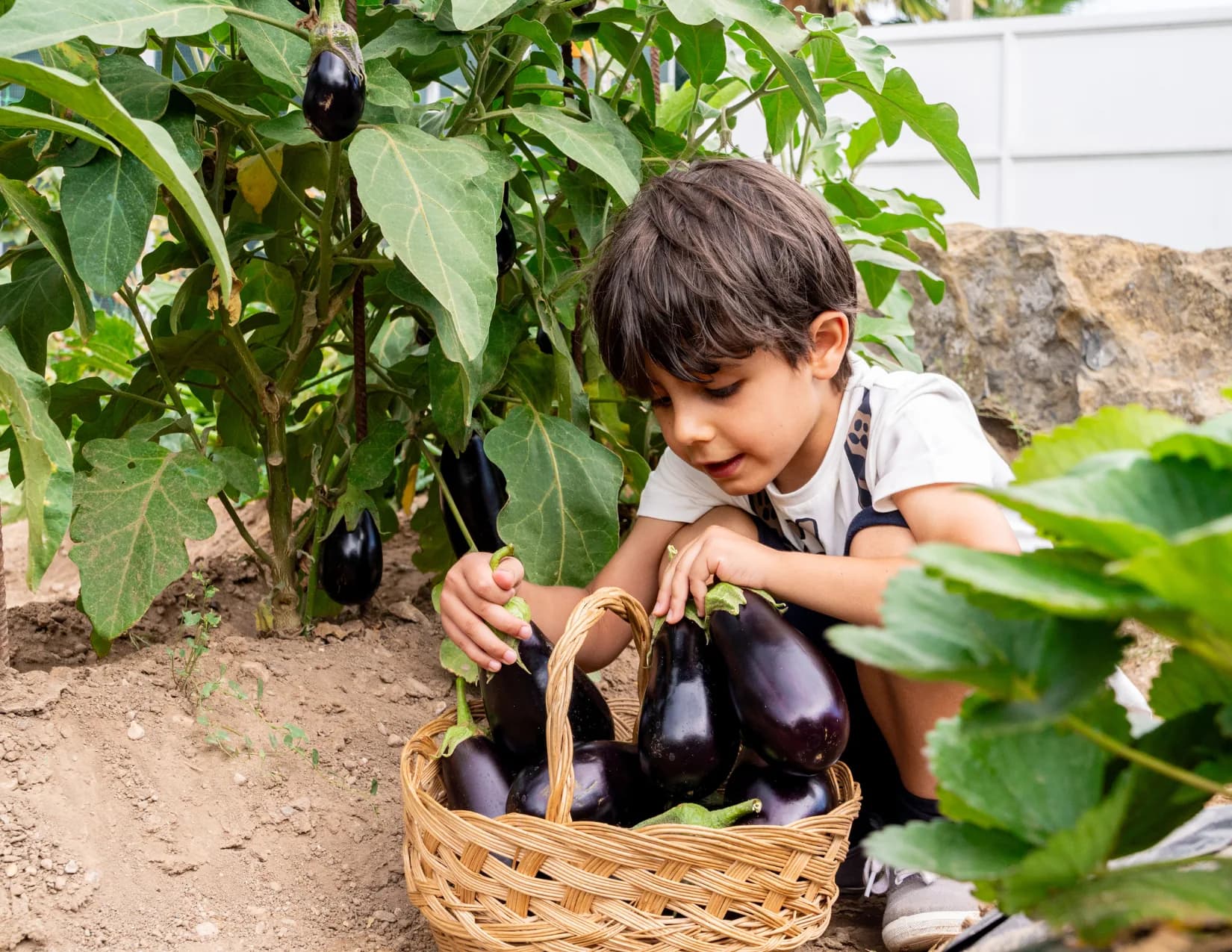
The three-hour uninterrupted work cycle is the non-negotiable centre of the day. Everything else is arranged around protecting it.
On the shelves
Four things you would see on a visit.
Timeline of Life
Ten meters of geological time, rolled out on the floor
The Checkerboard
Long multiplication as a physical, color-coded act
Grammar Symbols
Parts of speech as shapes a child can move and sort
The Black Strip
How briefly humans have been here, shown rather than said
From a family
“The guides actually know our son. Not just his name — his learning patterns, what excites him, where he gets stuck. That depth of observation is unlike anything we experienced elsewhere.”
The Reinholt Family
Lower Elementary, since 2020
The continuum