Studio Demo · Fictional school — Montessori Makers School is a fictional school built by Montessori Makers Studio
Build yours →Home / Our Program
Three communities. One continuum.
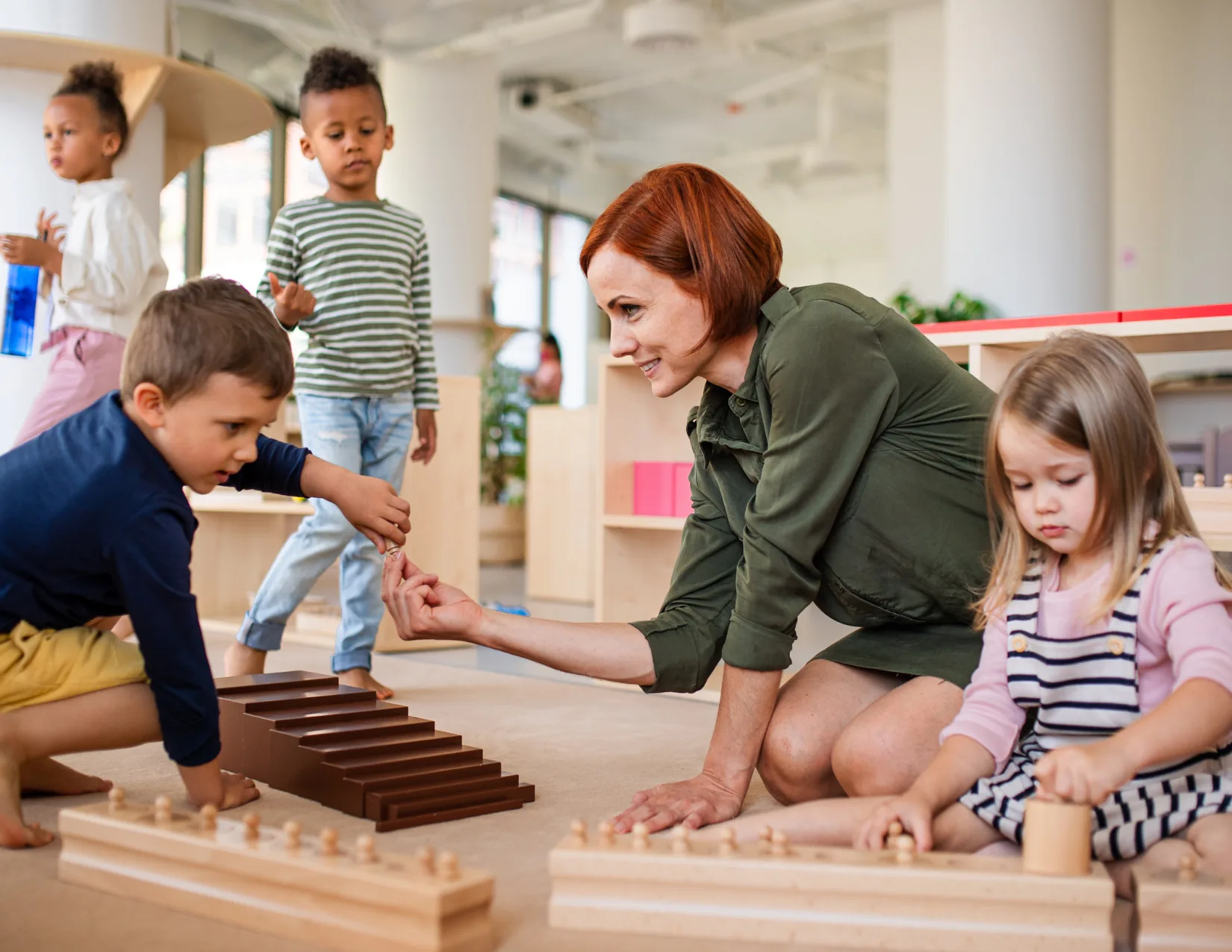
Children arrive at three and leave at twelve. What happens in between is not nine separate years of school but one continuous arc, taught by guides who know exactly what came before and what comes next.
3–12
Ages served
7
Classroom communities
3 hr
Uninterrupted work cycle
100%
Lead guides AMI or AMS credentialled
The programs
How do children learn at MMS?
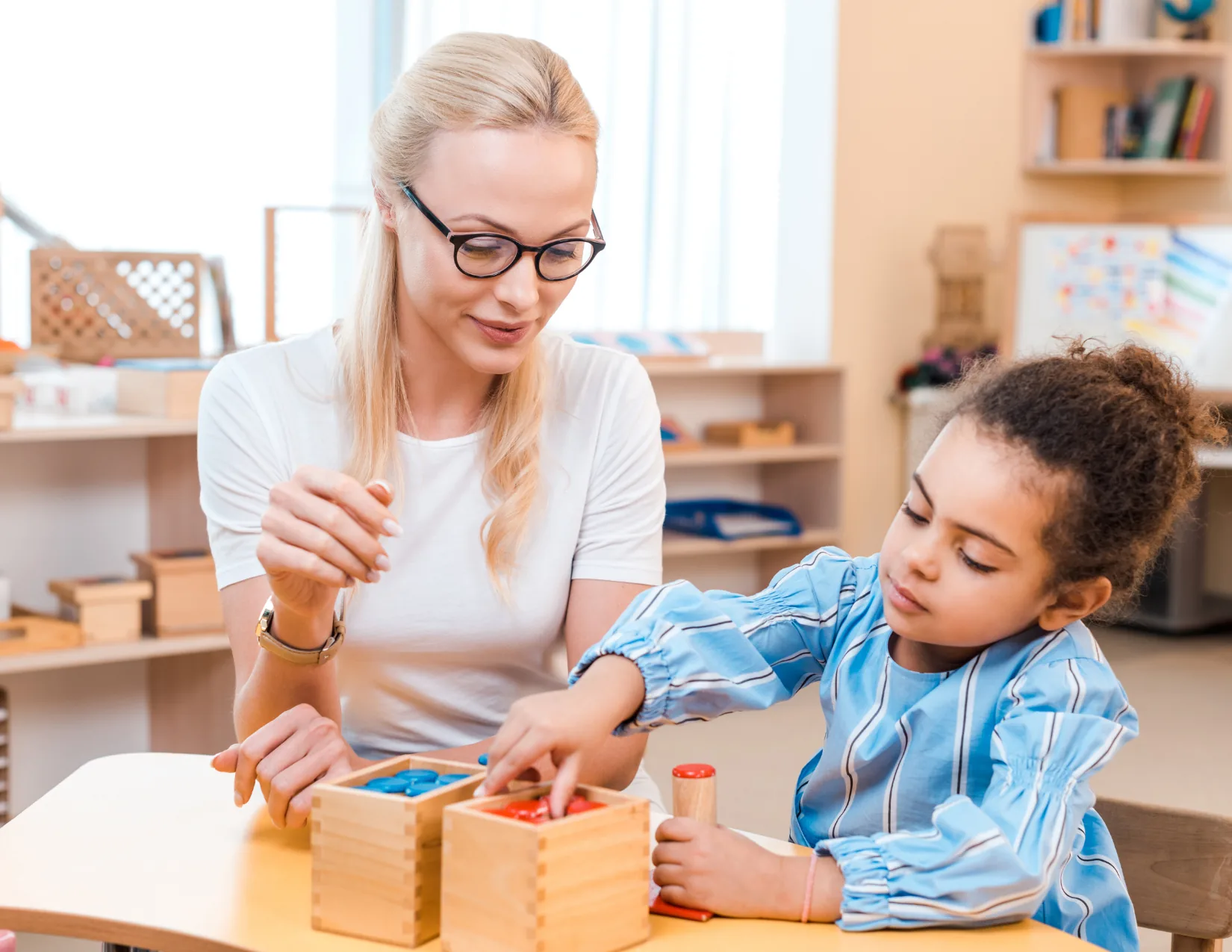
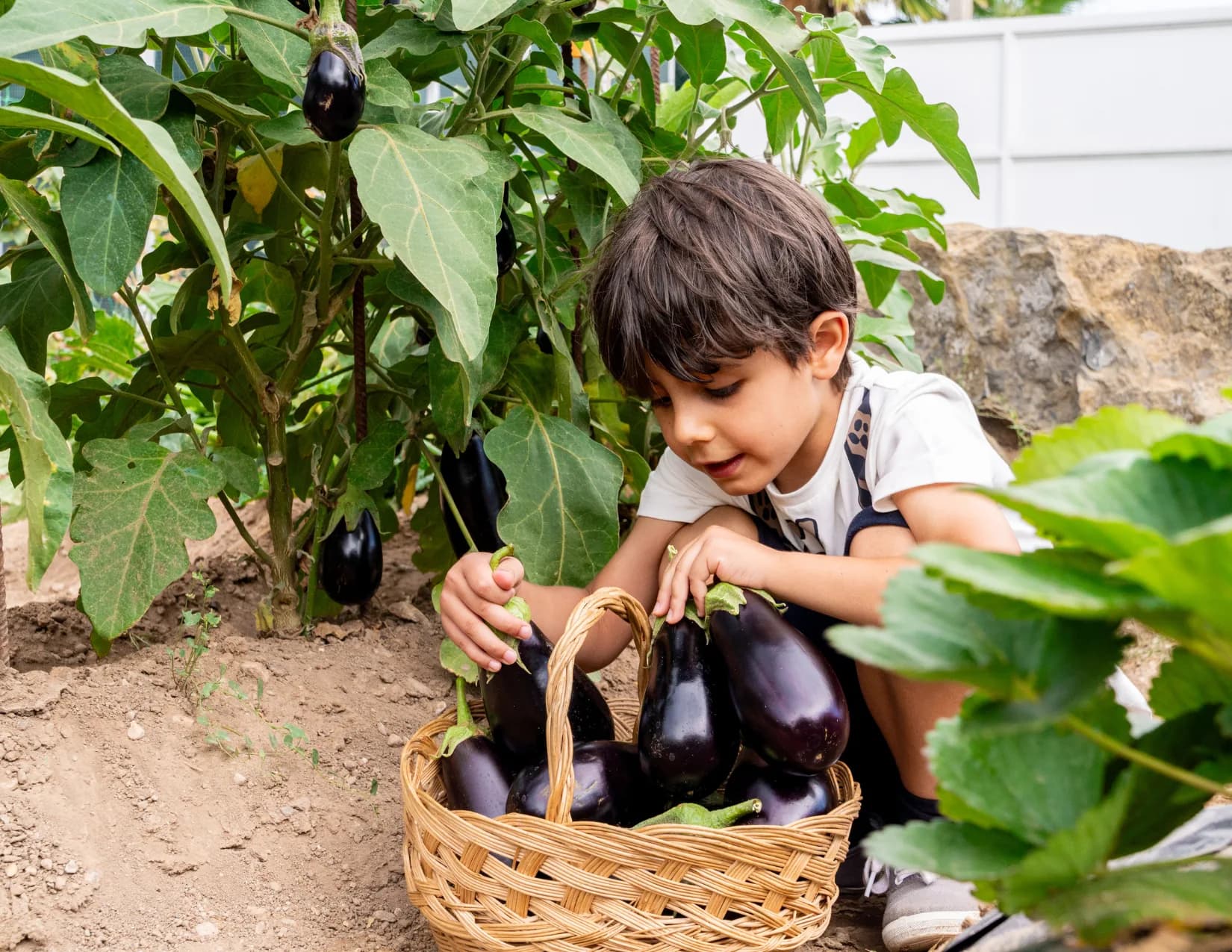
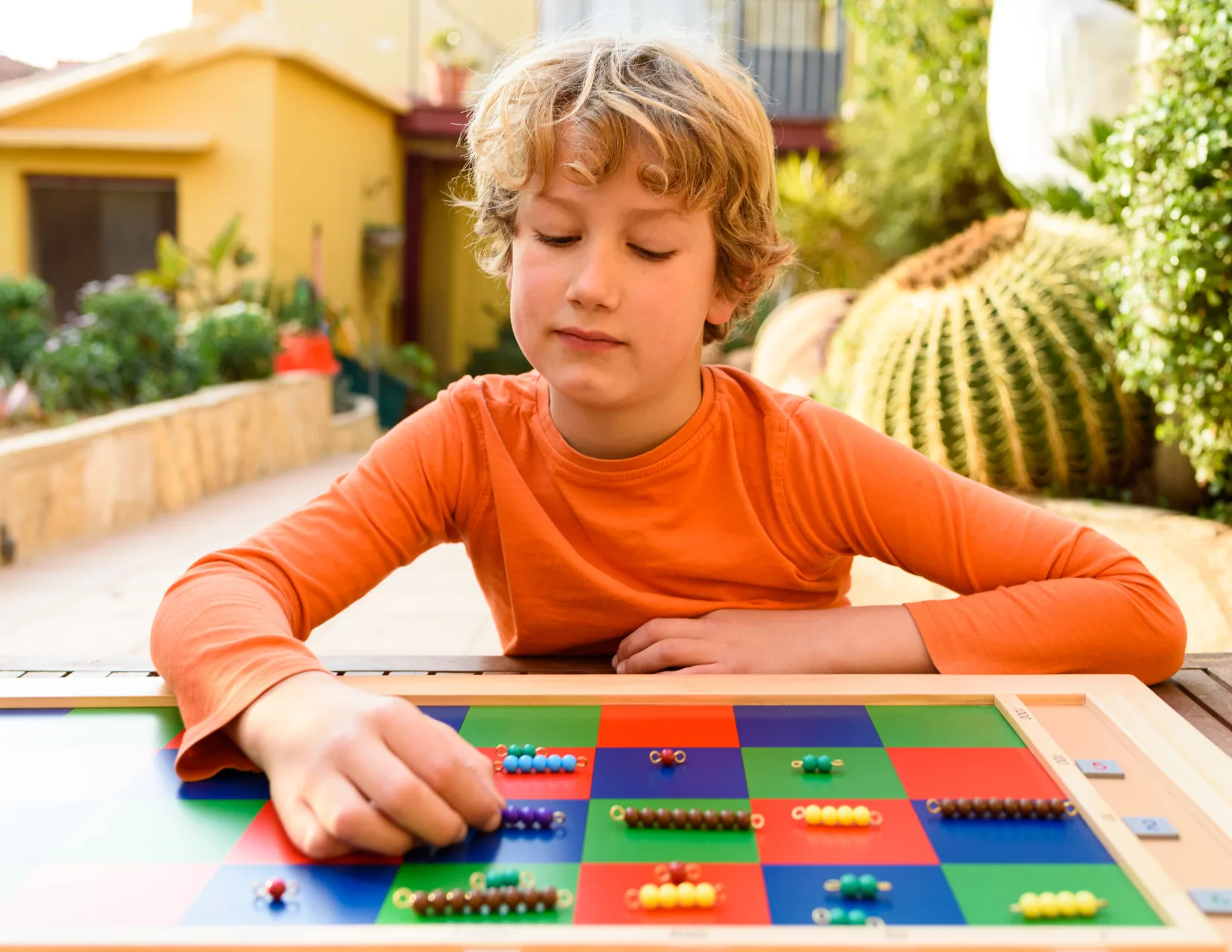
Each level has its own page with the daily rhythm, the materials you would see on a visit, and what families tell us about it.
What holds it together
Six commitments, in every classroom.
These are the things that would have to change for MMS to stop being a Montessori school. They are the reason we say no to a certain amount of otherwise reasonable requests.
01
The three-hour work cycle
Uninterrupted, every morning, in every classroom. No bells, no rotations, no pulling children out. Deep concentration takes about forty minutes to arrive and we refuse to schedule over it.
02
Mixed ages, three-year cycles
Every child spends a year as the youngest, a year in the middle, and a year as the eldest. The teaching a nine-year-old does for a seven-year-old is not a favor to the school; it is the deepest form of learning available.
03
Freedom within limits
Children choose their work, their pace, their place in the room, and whether to work alone. What they may not choose is to disturb another child’s concentration, or to leave the environment worse than they found it.
04
The material teaches
Every material isolates one difficulty and contains its own control of error. A child discovers a mistake from the work itself, not from a red pen, which is why they are willing to try again.
05
Observation, not assessment
Guides keep running written records of what each child chose, sustained, mastered, and avoided. Twice a year those records become a portfolio and a conversation. There are no grades at any level.
06
Fidelity, without nostalgia
The sequence Dr. Montessori established is not up for redesign. What she could not have anticipated — a city childhood in 2026, a second language, a climate curriculum — we build carefully on top of it.
How we know how a child is doing
No grades, no tests, and a far more detailed record than either produces.
Guides keep written observation records daily: what a child chose, how long they sustained it, what they returned to, what they are avoiding, and who they worked alongside. Over a three-year cycle this becomes a document no letter grade could approximate.
Twice a year those records become a portfolio and a ninety-minute family conference. Families also observe in the classroom once a term, from a chair in the corner, with a written guide to what they are looking at.
In the final Upper Elementary year we add the conventional skills a secondary school will assume — timed writing, note-taking, and sitting a standardised assessment once, so that the format is not a surprise.